
In the chaotic world of trade shows and retail, you have roughly three seconds to grab a potential customer’s attention. That’s it. If your booth looks generic or your store signage is fading, people will walk right past without a second glance.
Many businesses rely on flimsy vinyl banners or paper posters that curl at the edges. While these are cheap, they often communicate “temporary” or “low budget.” To truly stand out and signal quality, you need materials that reflect the high standards of your brand.
This is where the acrylic trade show display changes the game. Sleek, glossy, and incredibly vibrant, acrylic prints act like a magnet for the eyes. They offer a premium aesthetic that instantly elevates your visual merchandising.
In this guide, we will explore how to leverage acrylic prints to transform your booth or retail space. We’ll cover why they are superior to traditional signage, how to style them effectively, and practical tips for transport and setup.
Why Choose an Acrylic Trade Show Display?
When investing in booth materials, you want durability and impact. An acrylic trade show display offers specific advantages that paper, canvas, and vinyl simply cannot match.
1. Unmatched Visual Impact
Acrylic (often called Plexiglass) has unique optical properties. When light hits the edges, it refracts inward, illuminating the image from within. This gives your graphics a 3D depth and brilliance that makes colors pop. In a crowded exhibition hall with harsh overhead lighting, this natural luminosity helps your branding shine.
2. Durability for Travel
Trade show gear takes a beating. It gets packed in crates, tossed in trunks, and handled roughly. Unlike glass, which is heavy and fragile, acrylic is shatter-resistant and lightweight. It can survive the journey from city to city without cracking, ensuring your display looks pristine every time.
3. Professional Perception
Perception is reality in business. A high-gloss, rigid sign communicates stability and professionalism. It aligns perfectly with modern design trends, making it an excellent choice for acrylic wall art for business environments where first impressions define client relationships.
Best Applications for Retail and Trade Shows
Acrylic is versatile. You can use it for everything from massive backdrops to tiny pricing signs. Here are the most effective ways to integrate an acrylic trade show display into your strategy.
The Hero Backdrop
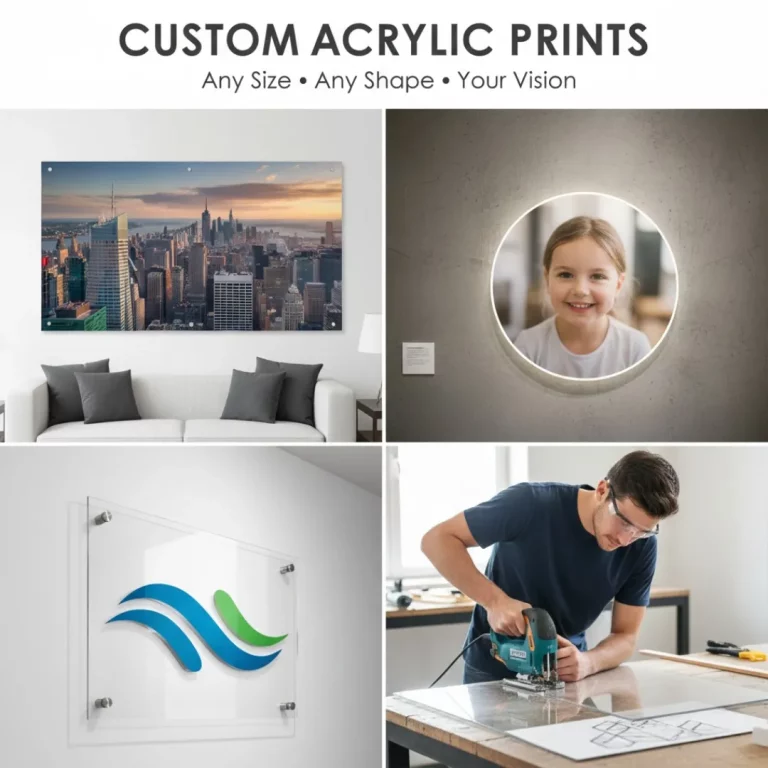
Instead of a wrinkled fabric backdrop, consider mounting large acrylic wall art panels as your centerpieces. A large-format acrylic print featuring your flagship product or a stunning lifestyle shot creates a focal point that anchors the entire booth. If you want to create a massive visual impact, learn more about how to make a statement with large wall art acrylic prints.
Tabletop Signage and Pricing
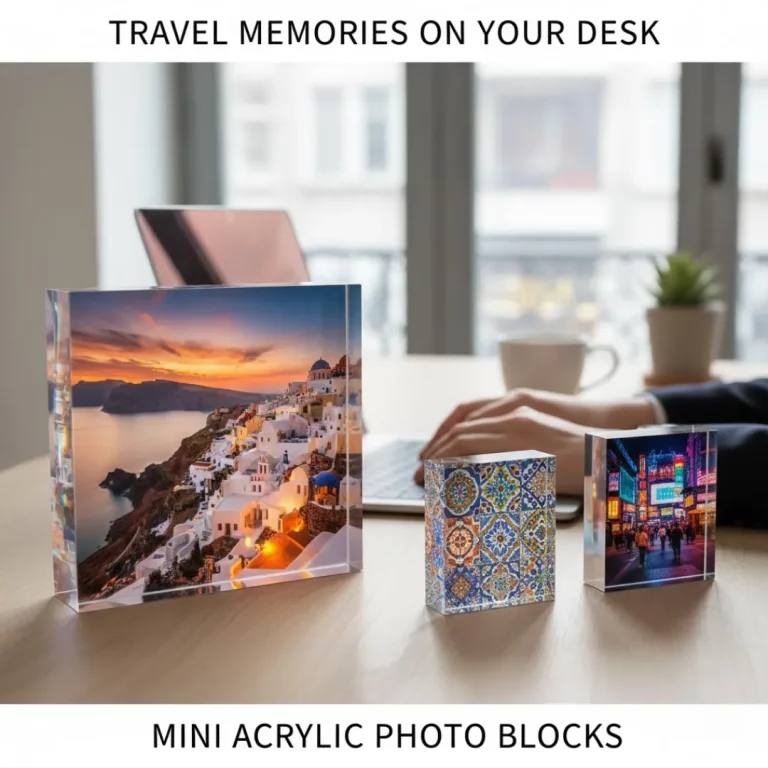
Don’t let your table be an afterthought. Small, free-standing acrylic blocks are perfect for displaying pricing lists, QR codes, or product specs. They are heavy enough not to blow away and look far more elegant than a plastic flyer holder.
Reception and Lobby Branding
If you are running a retail pop-up or upgrading your permanent showroom, the reception area is key. A clear acrylic sign with your logo mounted behind the counter creates an immediate sense of authority. This strategy is also highly effective for corporate spaces—check out our guide on office lobby wall art for inspiration on impressing visitors the moment they enter.
Awards and Recognition
Do you want to show off industry certifications or “Best of” awards at your booth? Instead of a cheap frame, print your credentials directly onto acrylic. When comparing an acrylic wall plaque vs. frames, the acrylic plaque always looks more prestigious and modern.
Designing for Impact: Tips for Success
Creating an effective acrylic trade show display requires a slightly different approach than designing for web or paper.
Keep It Simple
Acrylic adds depth and reflection. If your design is too cluttered with small text, it can become hard to read under bright convention center lights. Stick to bold logos, high-resolution imagery, and minimal text.
Use High-Contrast Colors
Because acrylic enhances color vibrancy, high-contrast designs look spectacular. Deep blacks and bright neon hues work exceptionally well. If you are struggling with color choices, looking into top 10 acrylic wall art ideas can spark creativity for your booth graphics.
Lighting is Everything
To maximize the “glowing” effect of your acrylic trade show display, plan your lighting. Clip-on spotlights directed at the face of the print, or LED strips placed behind a floating acrylic panel, can make the image appear backlit and incredibly dynamic.
Installation and Setup Logistics
Setting up a trade show booth is a race against the clock. You need displays that are easy to mount and demount.
Standoff Mounts
The most common way to display acrylic signage is with metal standoffs. These bolts hold the print an inch or so off the wall or backdrop, enhancing the 3D floating effect. They look industrial and chic. If you aren’t sure how to install them, a quick DIY guide to hang acrylic wall art can walk you through the process.
Ease of Cleaning
Fingerprints are the enemy of a glossy display. Always pack a microfiber cloth and a small bottle of acrylic-safe cleaner in your trade show kit. A quick wipe-down before the show floor opens ensures your acrylic trade show display looks crystal clear.
Reusability
Unlike vinyl banners that often get dated or wrinkled, high-quality acrylic prints are durable assets. You can reuse them for years. Between shows, you can even repurpose them in your company headquarters, using acrylic wall art to brighten your office space and maximize your investment.
Conclusion
In a sea of sameness, an acrylic trade show display sets your brand apart. It combines the durability needed for travel with the high-end aesthetic needed to close deals. By swapping out tired banners for vibrant, glossy acrylic, you signal to customers that you care about quality and detail.
Whether you are outfitting a 10×10 booth or redesigning a flagship retail store, acrylic prints offer a versatile, stunning solution that demands attention. Upgrade your display game today and watch heads turn at your next event.
Frequently Asked Questions (FAQ)
Q: Is an acrylic trade show display heavy to transport?
A: Acrylic is much lighter than glass, making it relatively easy to transport. However, it is heavier than vinyl or foam board. For large panels, we recommend using a wheeled travel case to protect the corners and make movement easy.
Q: Can I use acrylic prints outdoors for a market stall?
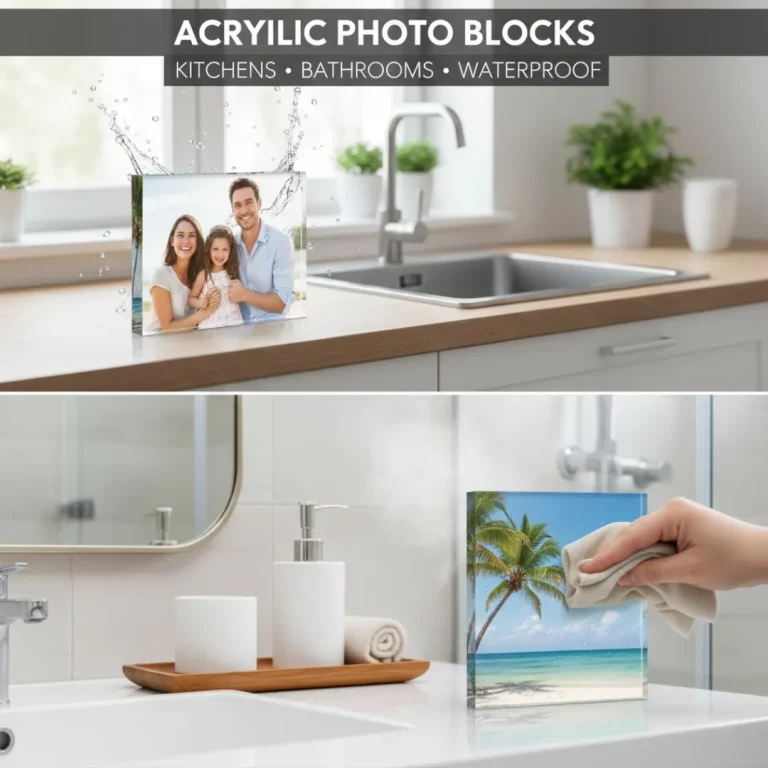
A: Yes, acrylic is moisture-resistant and durable. It can withstand humidity and wind better than paper products. However, long-term exposure to direct, harsh sunlight over many years may eventually cause fading, but for short-term events, it is excellent.
Q: How do I prevent scratches during transport?
A: Always wrap your acrylic prints individually in bubble wrap or soft foam sheets. Never stack them face-to-face without a protective layer in between, as the back of one print could scratch the face of another.
Q: Does acrylic glare under trade show lights?
A: Standard acrylic has a glossy finish which is reflective. While this makes colors pop, it can catch glare. Position your lights at an angle (usually 45 degrees) rather than pointing them straight at the sign to minimize reflection.
Q: Can I get a custom shape for my logo sign?
A: Absolutely. One of the biggest benefits of an acrylic trade show display is that acrylic can be laser-cut into any shape. You can have a sign that follows the exact contour of your logo rather than a standard rectangle.
Q: Is acrylic better than metal for displays?
A: It depends on the look you want. Metal is industrial and matte, while acrylic is modern and glossy. Acrylic creates a sense of depth that metal cannot achieve, making it generally better for displaying photographs or vibrant graphics.
Q: How thick should the acrylic be for a booth display?
A: For wall-mounted signs, 1/8 inch or 1/4 inch thickness is standard. If you want a free-standing block for a table, you will need something much thicker, usually 1 inch, to ensure it stands up on its own.