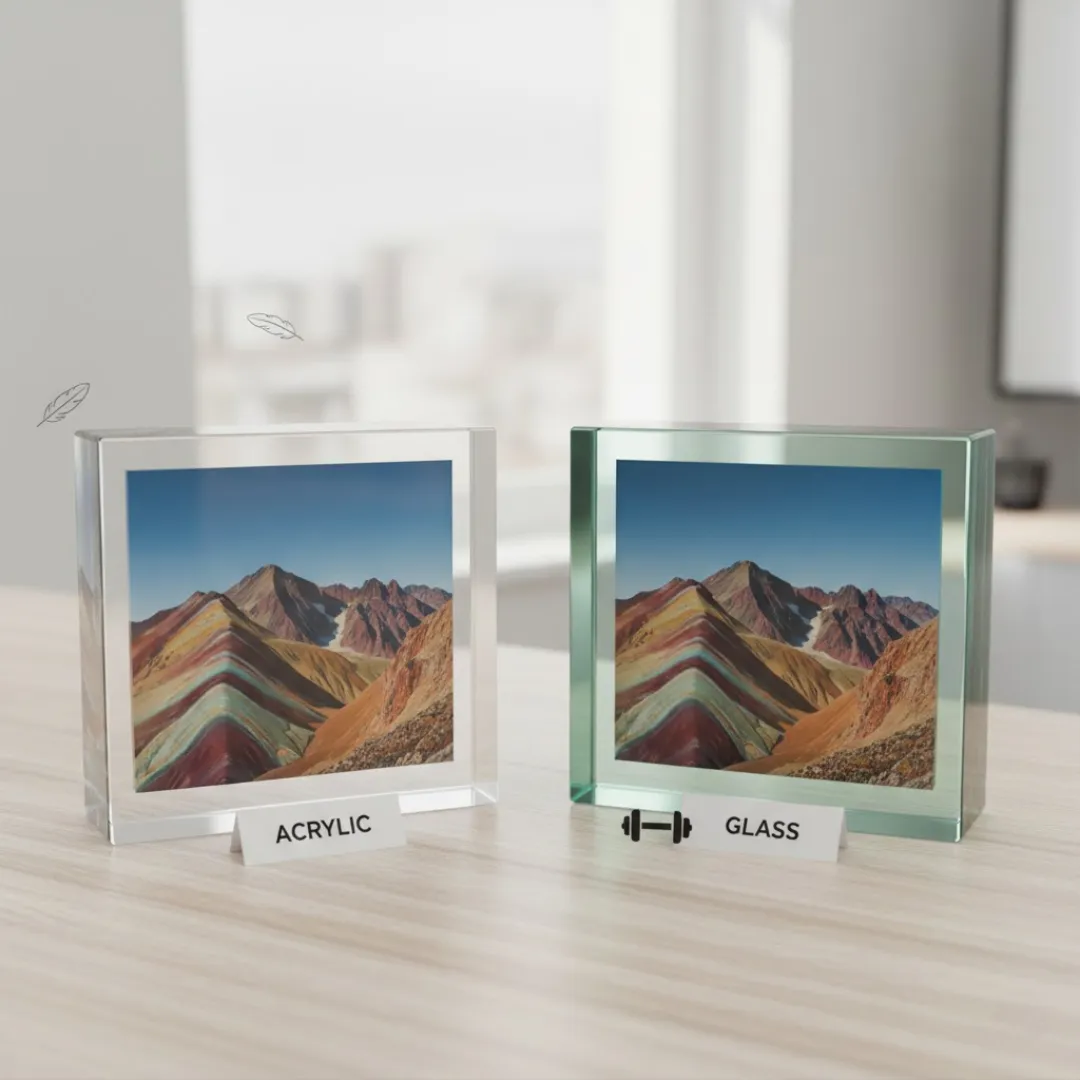
When you want to display a cherished memory on your desk or mantel, a freestanding photo block is a modern and elegant choice. It removes the distraction of a traditional frame, allowing the image to take center stage. However, when shopping for these sleek displays, you’ll likely encounter two main materials: acrylic and glass. At first glance, they might look similar, but the differences between an acrylic photo block vs glass are significant.
Choosing the wrong material could mean ending up with a display that is too heavy, fragile, or lacks the visual punch you were hoping for. You want a piece that enhances your photo, not one that puts it at risk.
In this guide, we will break down the key differences between acrylic and glass photo blocks. We’ll compare them on clarity, weight, durability, and cost so you can make an informed decision and choose the perfect home for your favorite memories.
Clarity and Optical Quality
The most important job of a photo block is to make your image look good. While glass is the traditional standard for clarity, acrylic has some surprising advantages.
The Green Tint of Glass
Standard glass contains iron oxide, which gives it a slight green tint. You might not notice this in a thin windowpane, but in a thick block of glass (often 1 inch thick), this green hue becomes very apparent, especially at the edges. This tint can slightly alter the colors of your photograph, making whites appear cooler or greenish.
The Crystal Clarity of Acrylic
High-quality acrylic (often called Plexiglass) is optically purer than standard glass. It allows more light to pass through, resulting in a brighter, sharper image. When you compare an acrylic photo block vs glass, you’ll notice that acrylic is completely colorless, even at significant thicknesses. This optical purity ensures your colors remain true and vibrant. This superior clarity makes acrylic the preferred choice for high-end displays, such as professional acrylic wall art for business.
Weight Differences
Weight is a practical consideration, especially for larger blocks or if you plan to move the display often.
- Glass: Glass is dense and heavy. A large glass photo block can be surprisingly cumbersome. If it sits on a delicate shelf or a glass table, the weight could be a concern.
- Acrylic: Acrylic is a thermoplastic that is roughly half the weight of glass. An acrylic block feels substantial and high-quality but is much easier to handle. This lightweight nature makes it a safer option for higher shelves where a heavy glass block might be a hazard.
Durability and Safety
Accidents happen. A cat jumps on the mantel, or an elbow bumps a desk. How your photo block handles a fall is a major factor in the acrylic photo block vs glass debate.
The Fragility of Glass
Glass is brittle. If a heavy glass block falls onto a hard floor, it will likely shatter into dangerous shards. This makes it a risky choice for homes with children, pets, or high-traffic areas.
The Resilience of Acrylic
Acrylic is known for its impact resistance. It is shatter-resistant, meaning if it falls, it is much less likely to break. Even if it does break under extreme force, it typically snaps into large, dull pieces rather than shattering into sharp slivers. This safety feature is why acrylic is often recommended for acrylic wall art for rentals and family homes.
Visual Depth and “The 3D Effect”
One of the main reasons people choose photo blocks is for the unique 3D effect they provide.
Refraction
Because the image is mounted to the back of the block, you view it through the thickness of the material. Light refracts (bends) as it enters the block, making the image appear to float inside.
While both materials offer this effect, the superior light transmission of acrylic enhances it. The image often appears more luminous and three-dimensional in acrylic because less light is absorbed by the material. This depth is what makes custom acrylic name plate designs look so sophisticated on executive desks.
Cost and Value
Price is always a consideration. Generally, glass is cheaper to produce than high-quality cast acrylic.
- Glass Blocks: You can often find glass photo blocks at lower price points in big-box stores. They are mass-produced and affordable.
- Acrylic Blocks: High-quality, polished acrylic blocks are often more expensive. The material itself costs more, and the process of diamond polishing the edges to crystal clarity is labor-intensive. However, the investment pays off in clarity and durability.
Comparison Summary: Acrylic Photo Block vs Glass
Here is a quick reference guide to help you decide.
| Feature | Acrylic Photo Block | Glass Photo Block |
|---|---|---|
| Clarity | Excellent, optically clear | Good, but often has a green tint |
| Weight | Lightweight (half of glass) | Heavy and dense |
| Durability | High impact resistance | Fragile, can shatter |
| Safety | Safe (shatter-resistant) | Risk of sharp shards |
| Cost | Moderate to High | Low to Moderate |
| Light Transmission | ~92% | ~80-90% (standard glass) |
Which Should You Choose?
Choose Glass If:
- Budget is your priority: You need a simple, affordable gift.
- You like the weight: Some people prefer the very heavy, paperweight feel of glass.
- Green edges don’t bother you: The tint isn’t an issue for the specific photo (e.g., a nature shot with lots of greens).
Choose Acrylic If:
- Image quality is paramount: You want the truest colors and sharpest details.
- Safety is a concern: You have kids, pets, or the block will be in a busy area like an office lobby wall art display.
- You want a modern look: The crystal-clear edges offer a sleeker aesthetic.
- You are displaying text: The clarity of acrylic makes text easier to read, which is why it’s preferred for modern engraved acrylic frame ideas.
Conclusion
While glass has served us well for centuries, acrylic has emerged as the superior material for modern photo displays. When comparing an acrylic photo block vs glass, acrylic wins on clarity, safety, and visual impact.
It eliminates the green tint associated with thick glass, ensuring your memories are seen exactly as they were captured. Whether you are looking for a personalized gift or a way to brighten up your desk, an acrylic block offers a premium, gallery-quality look that stands the test of time.
Frequently Asked Questions (FAQ)
Q: Does acrylic scratch easier than glass?
A: Yes, acrylic has a softer surface than glass and can be scratched if treated roughly. However, minor scratches on acrylic can often be buffed out with a specialized polish, whereas scratches on glass are permanent.
Q: How do I clean an acrylic photo block?
A: Use a soft, lint-free microfiber cloth. If needed, dampen it slightly with water or a cleaner specifically designed for acrylic. Never use paper towels or ammonia-based glass cleaners (like Windex), as these can cause cloudiness over time.
Q: Do acrylic photo blocks turn yellow over time?
A: High-quality cast acrylic is UV resistant and should not yellow for many years, even decades. Cheaper plastics might yellow, so it’s important to purchase from a reputable printer that uses premium materials.
Q: Can I get an acrylic block in different sizes?
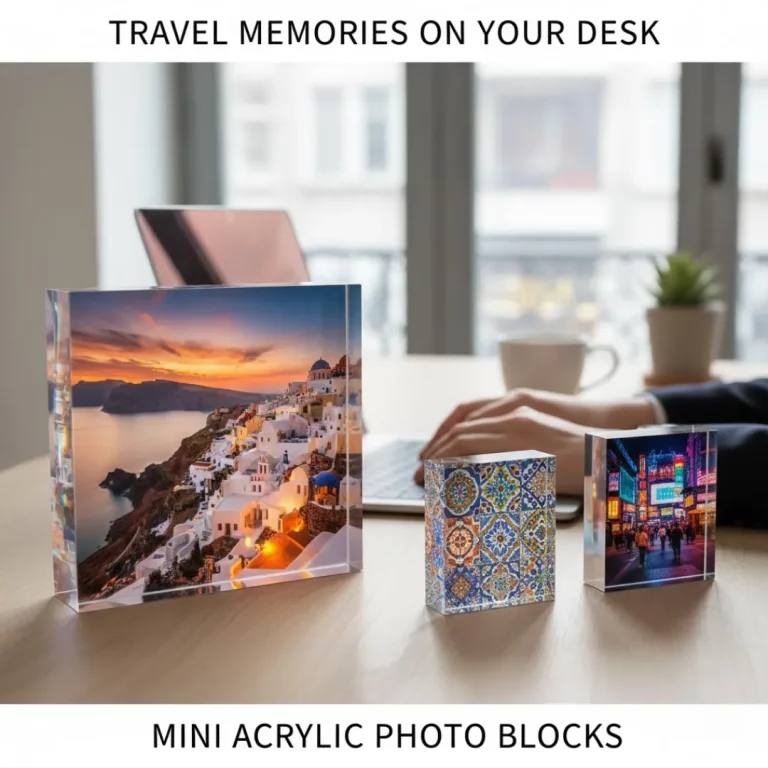
A: Absolutely. Acrylic blocks are available in a wide range of sizes, from small 4×6 blocks perfect for a desk to larger 8×10 statements. You can even find custom sizes if you look for companies specializing in custom acrylic wall art and decor.
Q: Is an acrylic block the same as an acrylic print?
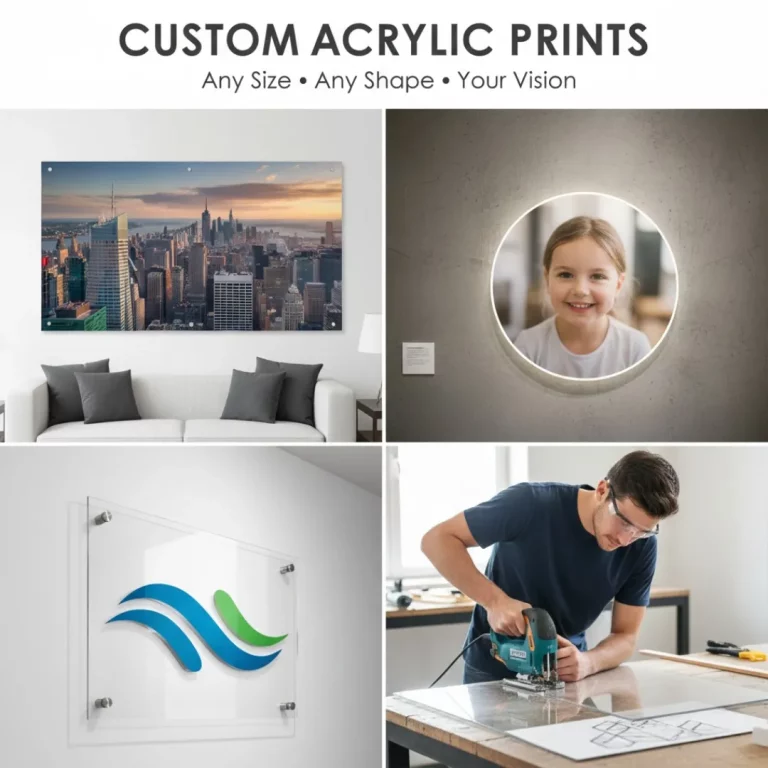
A: Not exactly. An acrylic block is usually 1 inch thick and free-standing. An acrylic print (or wall art) is typically much thinner (around 1/8 to 1/4 inch) and is designed to be hung on a wall. See our guide on acrylic wall art vs. frames for more on wall options.
Q: Can I put an acrylic block in the bathroom?
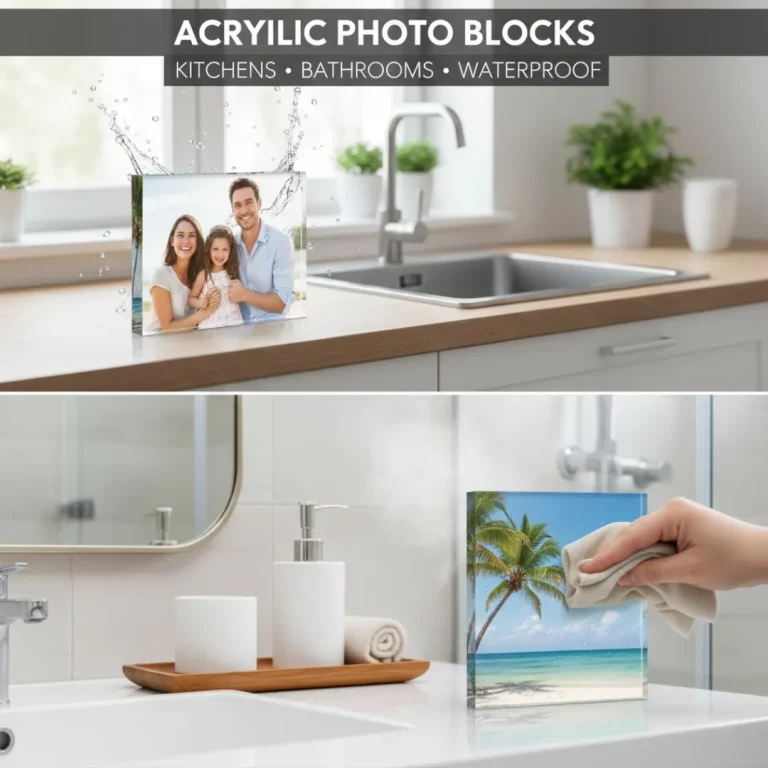
A: Yes! Acrylic is moisture-resistant and won’t be damaged by humidity, making it a great choice for bathroom decor. It’s safer than glass on tiled floors. Check out acrylic art for bathrooms for more ideas.
Q: Why are the edges of my acrylic block shiny?
A: High-quality acrylic blocks undergo a process called diamond polishing. This smooths the edges to a perfectly clear, glossy finish, allowing light to enter from the sides and illuminate the image.