We all have that one photo—a family vacation snapshot, a picture of a beloved pet, or a graduation smile—that deserves a prime spot on our desk. For decades, the go-to solution was a standard picture frame with a kickstand. But recently, a sleek, modern contender has entered the ring: the acrylic photo block.
This new style of display is rapidly gaining popularity in modern homes and offices. But is it actually better than the classic frame we all grew up with? Choosing between the two isn’t just about price; it’s about style, durability, and how you want to experience your memories.
In this desk decor showdown, we’re pitting the futuristic acrylic photo block against the traditional picture frame. We’ll break down the pros and cons of each to help you decide which one deserves the valuable real estate on your tabletop.
What is an Acrylic Photo Block?
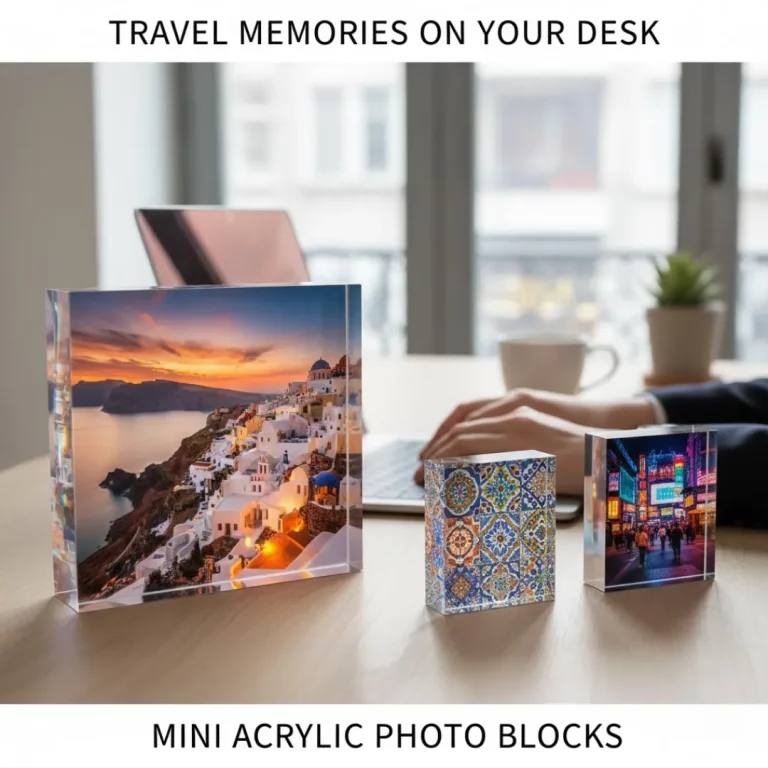
An acrylic photo block (often called a photo block or acrylic prism) is a solid, freestanding piece of clear acrylic. Your photo is typically mounted to the back of the block, allowing you to view the image through the crystal-clear material.
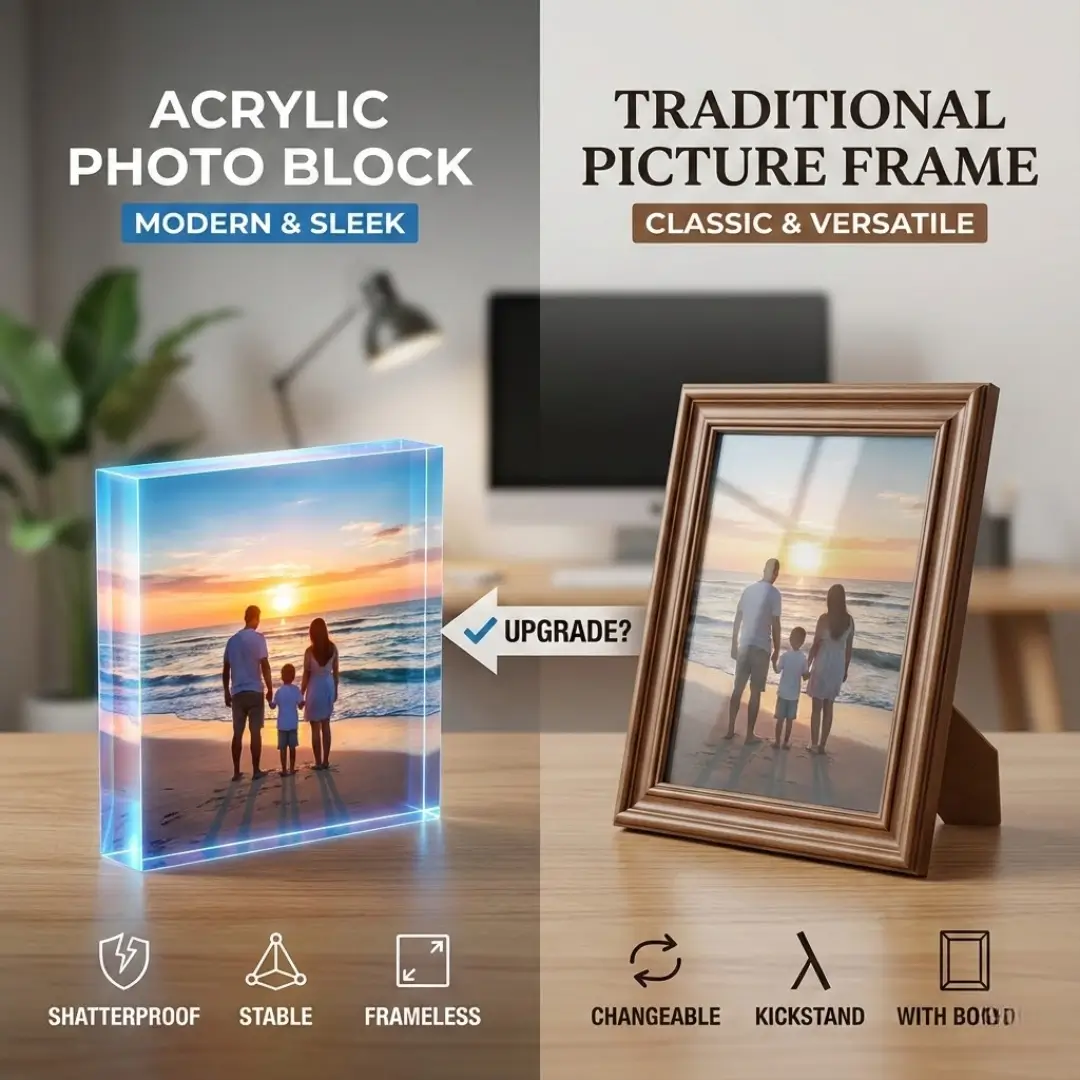
Because the acrylic is thick—usually around an inch—it creates a mesmerizing 3D effect. Light enters from the sides and refracts, making the image appear luminous and vibrant. It stands on its own without the need for a kickstand or easel. This frameless design is the hallmark of modern minimalism.
The Traditional Picture Frame: A Classic Choice
We are all familiar with the traditional picture frame. It consists of a border (wood, metal, or plastic), a pane of glass or thin plastic to protect the photo, and a backing board with a stand.
Frames offer variety. You can choose a rustic wooden border for a farmhouse feel or a sleek silver edge for a touch of elegance. They frame the image in the literal sense, creating a boundary between the photo and the rest of the room. While they are great for display, they serve a different function than photo frames vs photo albums, which are designed for bulk storage rather than showcasing a single highlight.
Round 1: Aesthetics and Visual Impact
The biggest difference between an acrylic photo block and a frame is the visual experience.
The Acrylic Advantage
An acrylic photo block offers a “floating” effect. Because there is no border, the image extends to the very edge of the block. The thick acrylic adds depth and brilliance that standard glass just can’t match. Colors appear sharper and more saturated. If you love the look of 10 stunning ways to use acrylic photo frames, the photo block brings that same high-end gallery aesthetic to your desk on a smaller scale.
The Traditional Take
Traditional frames rely on the border to complement the photo. A heavy frame can sometimes overpower a delicate image, or it can add a necessary decorative touch to match your furniture. However, glass can often cause glare, making the photo hard to see from certain angles.
Winner: For pure visual “pop” and modern appeal, the acrylic photo block takes the round.
Round 2: Durability and Safety
Accidents happen. A stray elbow knocks over a picture, or a curious cat jumps onto the desk. How do these two contenders handle a fall?
The Fracture Factor
Traditional frames usually feature glass panes. If a frame falls, that glass can shatter, creating a dangerous mess and potentially ruining the photograph underneath. The frame corners can also chip or separate upon impact.
The Shatter-Resistant Solution
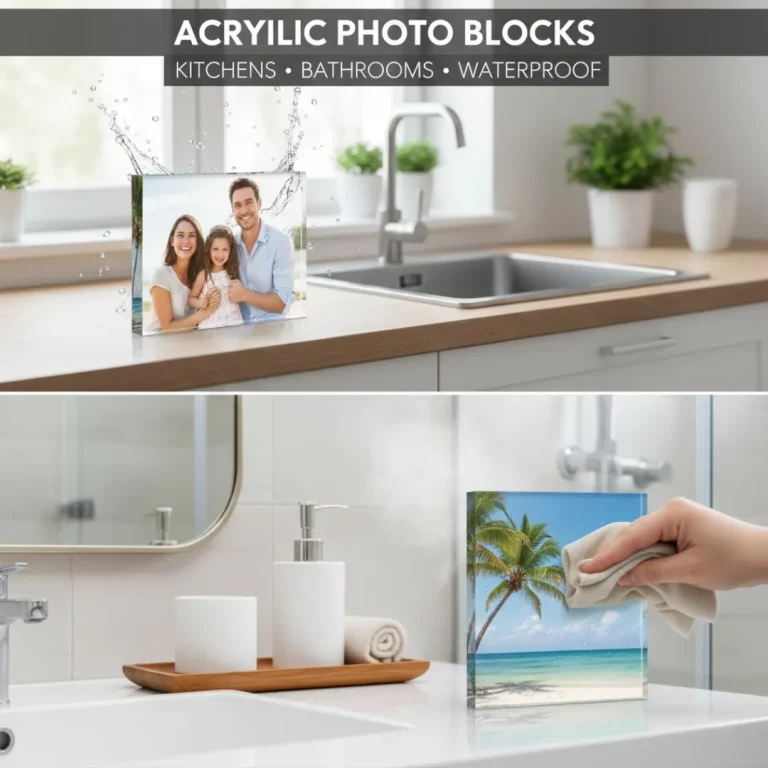
Acrylic is a type of plastic that is incredibly tough. An acrylic photo block is virtually shatterproof. If it topples over, it might get a scratch (though high-quality blocks are scratch-resistant), but it won’t explode into dangerous shards. This makes them ideal for households with kids or pets.
Winner: The acrylic photo block is the clear winner for safety and durability.
Round 3: Stability and Footprint
Desk space is precious. You don’t want your decor to take up more room than necessary or to be unstable.
The Kickstand Struggle
Traditional frames rely on a “leg” or kickstand at the back. This design increases the footprint of the frame significantly. It also makes the frame prone to tipping over if bumped from behind. Furthermore, cheap kickstands often wear out over time, causing the frame to slide flat.
Freestanding Design
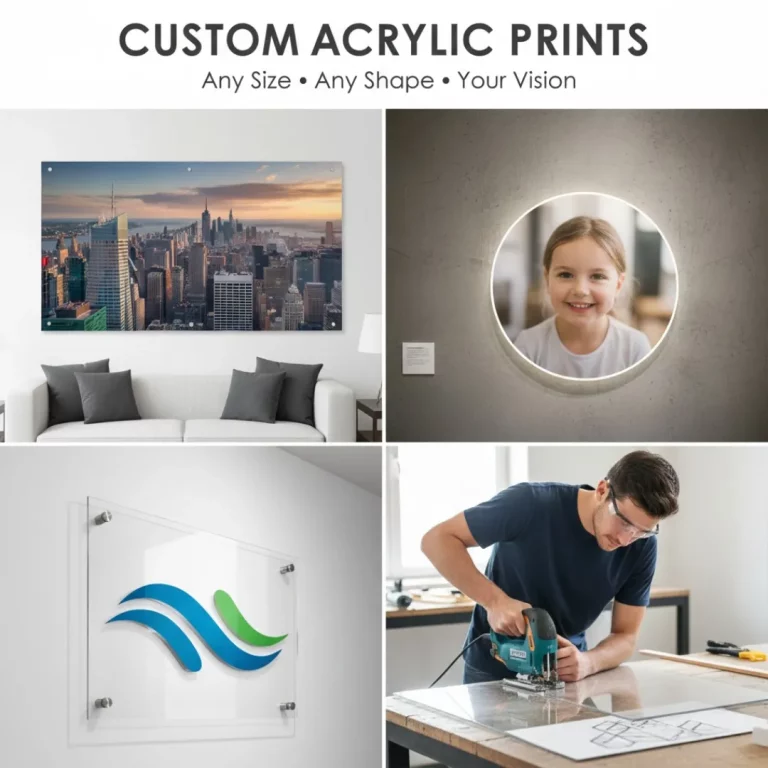
An acrylic photo block is designed to stand on its own. Its thick base provides a low center of gravity, making it very stable. It occupies less depth on your desk because it doesn’t need a leaning support. This sleek profile is why many companies now prefer acrylic wall art for business and acrylic desk blocks for a clean, professional office look.
Winner: For a compact and stable display, the acrylic photo block wins.
Round 4: Versatility and Customization
Sometimes you want to swap out a photo, or you want a very specific size.
- Swapping Photos: Traditional frames have the upper hand here. You can open the back and change the photo in seconds. With an acrylic photo block, the image is usually permanently mounted to the acrylic. You cannot change it without replacing the entire block.
- Customization: Both options offer customization. You can get custom-sized frames, just as you can order custom acrylic wall art or blocks. However, frames offer more decorative variety in terms of textures and colors (gold, wood, etc.).
Winner: Traditional frames win for flexibility in changing photos.
The Verdict: Which Should You Choose?
The battle between the acrylic photo block and the traditional frame ultimately comes down to your style and needs.
Choose an Acrylic Photo Block If:
- You love modern, minimalist design.
- You want the highest clarity and color vibrancy for your image.
- You need something durable for a high-traffic area or a kid’s room.
- You are looking for a unique gift that feels like a premium object.
- You want something similar to the sleek look of acrylic wall art vs framed photos but for your tabletop.
Choose a Traditional Frame If:
- You have a vintage or traditional decor style that requires wood or metal accents.
- You plan to change the photo frequently.
- You are on a very tight budget (basic frames can be cheaper than high-quality acrylic blocks).
Conclusion: A Modern Upgrade for Your Memories
While traditional frames will always have their place, the acrylic photo block represents a significant upgrade in how we display our memories. Its combination of durability, space-saving design, and stunning visual depth makes it a standout choice for modern desks and shelves.
Whether you are decorating your home office or looking for the perfect personalized gift, an acrylic block turns a simple photo into a piece of art. It invites you to look closer and appreciate the moment captured inside.
Ready to give your desk a makeover? Swap out that dusty old frame for a crystal-clear block and see the difference for yourself.
Frequently Asked Questions (FAQ)
Q: Can I change the picture in an acrylic photo block?
A: Typically, no. In most high-quality acrylic photo blocks, the image is professionally face-mounted to the acrylic using a permanent adhesive. This ensures the best clarity and 3D effect but means the photo cannot be swapped out. There are magnetic acrylic blocks that allow swapping, but they often lack the seamless “floating” look of mounted blocks.
Q: Do acrylic photo blocks scratch easily?
A: High-quality acrylic is relatively resistant to scratches, but it is softer than glass. You should avoid using rough paper towels or abrasive cleaners. A soft microfiber cloth is best for cleaning.
Q: Are acrylic photo blocks heavy?
A: Yes, they have a satisfying weight to them. A solid inch-thick block of acrylic is much heavier than a thin glass frame. This weight is actually a benefit, as it gives the block stability and a premium feel.
Q: How do acrylic blocks compare to digital frames?
A: Digital frames rotate through many images, which is great for variety. However, they require power cords and can sometimes look pixelated. An acrylic photo block offers superior resolution and requires no electricity, making it a simpler, more elegant option. If you are torn, reading a comparison of digital photo frames vs acrylic photo prints can help you decide.
Q: Can I use acrylic blocks for office signage?
A: Absolutely. Their stability and professional look make them perfect for nameplates or small informational signs. You can learn more about selecting office decor in our guide on how to choose the perfect acrylic name plate.
Q: Is an acrylic photo block the same as acrylic wall art?
A: The material is similar, but the thickness and display method differ. Wall art is usually thinner (around 1/8 to 1/4 inch) and uses mounting hardware. A photo block is much thicker (1 inch+) so it can stand on its own. For wall options, you might look into acrylic wall art vs canvas.
Q: Do acrylic blocks yellow over time?
A: High-quality acrylic blocks are made with UV-stabilized materials that prevent yellowing. Cheaper plastics might discolor, so it is important to purchase from a reputable printer to ensure your block stays crystal clear for years.