You’ve curated the perfect set of photos for a collage, but now you face a crucial decision: which material will best bring your vision to life? Choosing the right medium is just as important as the photos themselves, as it defines the final look and feel of your artwork.
The two most popular options are acrylic and canvas, each offering a distinct aesthetic. The debate of an acrylic photo collage vs canvas often leaves people wondering which is better for their space, photos, and budget. One provides a sleek, modern finish, while the other offers a classic, painterly texture.
This guide will break down the differences between them, comparing visual appeal, durability, style, and cost. By the end, you’ll have a clear understanding of which material is the ideal match for your new photo collage.
What is an Acrylic Photo Collage?
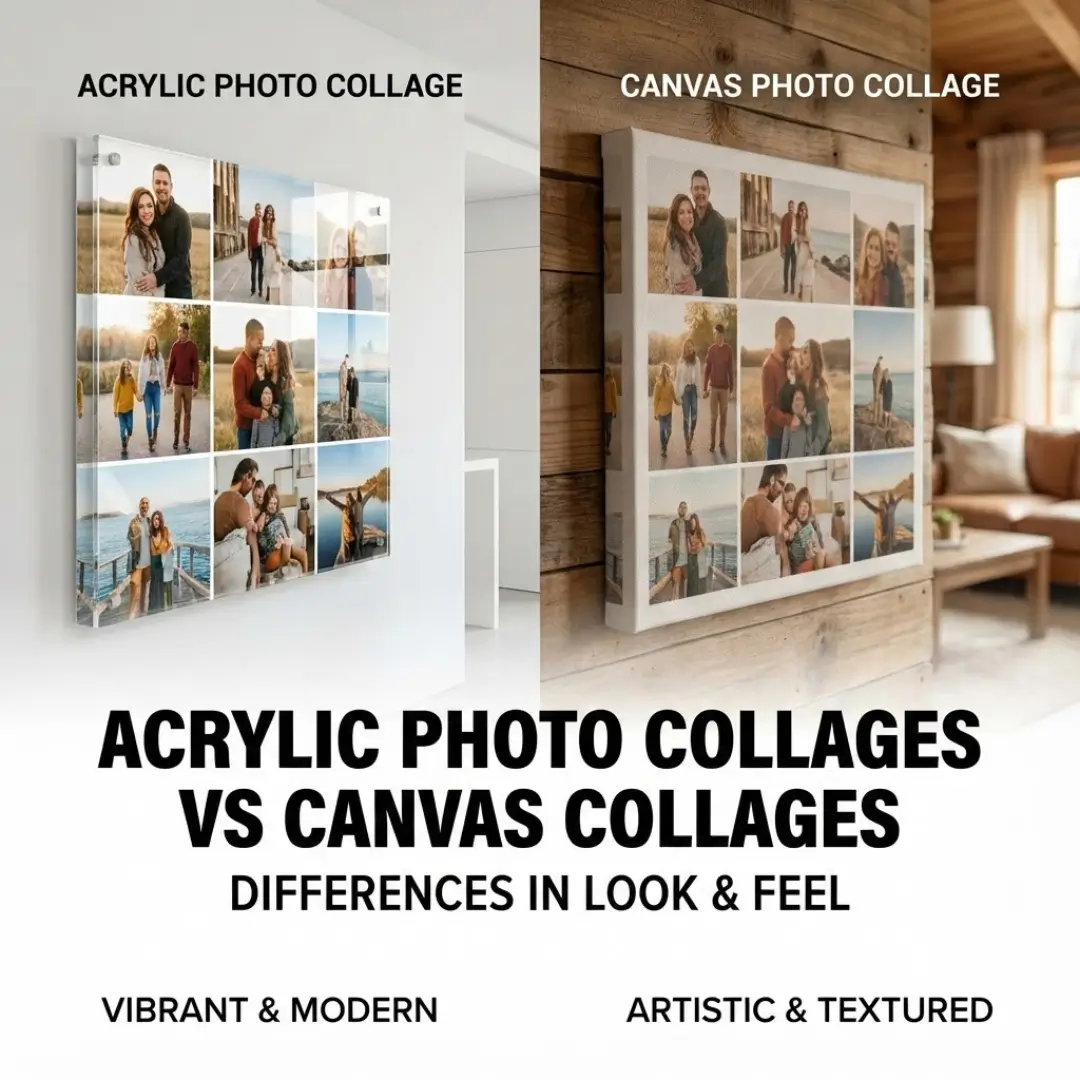
An acrylic photo collage involves printing your images directly onto photographic paper and then face-mounting them behind a sheet of polished acrylic. This process gives the photos remarkable depth and vibrancy, making colors pop with a near 3D effect.
The glossy surface of the acrylic enhances light and detail, creating a sharp, high-definition look. This modern presentation is frameless, often mounted with standoffs that make the art appear to “float” off the wall, adding to its contemporary appeal.
Key Features of Acrylic Collages:
- Vibrant & Luminous: The acrylic sheet enhances colors and creates a backlit effect.
- Modern & Sleek: A glossy, frameless finish that suits contemporary interiors.
- Exceptional Detail: Sharpness and clarity bring out the fine details in your photos.
- Durable: Shatter-resistant and offers natural UV protection.
This style is perfect for creating a powerful focal point, especially if you’re designing oversized wall art to make a statement.
What is a Canvas Photo Collage?
A canvas photo collage is created by printing your collection of images directly onto a woven canvas fabric. The canvas is then stretched over a wooden frame, creating a piece of art that has texture and a classic, gallery-style feel.
Unlike the glossy finish of acrylic, canvas has a matte surface that minimizes glare. Its textured nature adds a soft, artistic quality to the photos, reminiscent of a painting. Canvas collages can be displayed framed or unframed, offering flexibility in styling.
Key Features of Canvas Collages:
- Artistic & Textured: The woven material adds a painterly feel to your images.
- Matte & Glare-Free: Ideal for brightly lit rooms as it doesn’t create reflections.
- Classic & Timeless: Fits well with a wide range of decor styles, from rustic to traditional.
- Lightweight: Easy to handle and hang.
The timeless appeal of canvas makes it a versatile choice, especially when you’re looking to create a living room gallery wall.
Acrylic Photo Collage vs Canvas: A Detailed Comparison
Choosing between these two materials depends on your personal taste and where you plan to display the art. Let’s compare them side-by-side.
| Feature | Acrylic Photo Collage | Canvas Photo Collage |
|---|---|---|
| Visual Finish | Glossy, vibrant, high-definition | Matte, soft, textured |
| Best For | Modern, minimalist, and luxury interiors | Traditional, rustic, bohemian, and cozy decor |
| Color & Detail | Superior color vibrancy and sharpness | Softer, warmer color tones |
| Durability | Highly durable, shatter-resistant, UV-protective | Durable, but susceptible to moisture and punctures |
| Longevity | Excellent; colors are protected from fading | Good, but may fade over time without a protective coating |
| Cost | Generally more expensive | More budget-friendly |
1. Look and Feel: The Aesthetic Difference
The most significant factor in the acrylic photo collage vs canvas debate is the aesthetic.
- Acrylic delivers a clean, sharp, and ultra-modern look. Its glossy surface makes colors appear more saturated and creates a sense of depth that draws the viewer in. It’s the perfect choice for high-contrast, colorful photos and spaces that embrace a sleek design. Think of it as the high-definition TV of wall art.
- Canvas offers a softer, more subtle, and classic feel. The texture of the fabric breaks up the light, creating a glare-free matte finish that feels warm and inviting. It lends a fine-art quality to your photos, making it ideal for portraits, landscapes, and spaces with a cozy, traditional, or rustic vibe.
2. Durability and Longevity
When investing in a piece of art, you want it to last.
- Acrylic prints are exceptionally durable. The acrylic itself is shatter-resistant and protects the underlying photo from dust, moisture, and UV rays, which helps prevent fading over time. This makes them a great option for almost any indoor environment, including kitchens and bathrooms.
- Canvas prints are also durable but require more care. The canvas can be punctured or dented if not handled carefully, and it is more susceptible to moisture damage. While many canvases are treated with a protective coating, direct sunlight can still cause colors to fade over the years.
3. Best Interior Design Styles
Your choice should complement your home’s decor.
- An acrylic photo collage is a natural fit for modern, minimalist, contemporary, and industrial spaces. Its frameless, floating appearance and glossy finish enhance clean lines and sophisticated palettes.
- A canvas photo collage is incredibly versatile. It works beautifully in traditional, farmhouse, rustic, bohemian, and coastal-themed rooms. Its textured, warm feel adds character and coziness to any space. You can explore a variety of eco-friendly canvas art trends to align with a sustainable decor theme.
4. Cost Comparison
Budget is often a deciding factor.
- Acrylic is typically the more premium and expensive option. The multi-step production process and the cost of the materials contribute to its higher price point. However, its superior durability and stunning visual impact offer excellent long-term value.
- Canvas is generally more affordable, making it an accessible option for those on a tighter budget or looking to cover a large wall space. The canvas pricing guide can help you understand the different factors that affect the final cost.
Conclusion: Which Collage Style is Right for You?
The choice between an acrylic photo collage vs canvas ultimately comes down to your personal style, the photos you’re displaying, and your budget.
Choose an acrylic photo collage if you want a modern, vibrant, and high-impact piece that makes your photos pop with life and color. It’s the perfect investment for a contemporary home and for images that deserve to be seen in stunning detail.
Choose a canvas photo collage if you prefer a softer, warmer, and more classic piece of art with a timeless, painterly feel. It’s a versatile and budget-friendly option that adds character and warmth to any room.
Ready to turn your photos into art? Explore our options for creating a stunning photo collage for acrylic printing or browse our canvas collections to find the perfect match for your memories.
Frequently Asked Questions (FAQ)
Q: Is acrylic or canvas better for black and white photos?
A: Both work well, but they create different effects. Acrylic will give black and white photos a sharp, high-contrast look with deep blacks. Canvas will provide a softer, more artistic and nostalgic feel due to its texture. For a dramatic, modern look, choose acrylic. For a timeless, classic feel, choose canvas.
Q: Does acrylic look cheap?
A: Not at all. High-quality acrylic prints look luxurious and professional. The face-mounting process gives the image incredible depth and vibrancy, resulting in a premium product that is often seen in modern art galleries.
Q: Which is easier to clean, acrylic or canvas?
A: Acrylic is easier to clean. You can simply wipe it down with a soft, damp microfiber cloth. Canvas is more delicate; it should only be dusted lightly with a dry cloth, as moisture and cleaning chemicals can damage the print.
Q: Will my photo collage fade in the sun?
A: Acrylic offers better natural UV protection, significantly reducing the chance of fading. While high-quality canvases are treated with a UV-resistant coating, they are generally more susceptible to fading from long-term exposure to direct sunlight than acrylic prints.
Q: Can I frame a canvas collage?
A: Yes, absolutely. Canvas collages can be hung as-is for a modern gallery-wrapped look, or you can add a frame. A popular choice is a floating frame for canvas, which leaves a small gap between the canvas and the frame for a sophisticated finish.
Q: Which material is heavier?
A: Acrylic prints are generally heavier than canvas prints of the same size. This is an important consideration for hanging, as a large acrylic piece will require more robust wall anchors for a secure installation.
Q: Do colors look better on acrylic or canvas?
A: For color vibrancy and “pop,” acrylic is the winner. The light refracts through the acrylic sheet, illuminating the image and making colors appear more brilliant and saturated. Canvas has a matte finish, which results in softer, more subdued color tones.