
When shopping for a premium way to display your favorite photos, you will likely encounter two very similar-looking options: acrylic blocks and crystal (or glass) blocks. At a glance, they both look like thick, transparent slabs that make your images pop with a stunning 3D effect. However, if you dig a little deeper, you’ll find they are fundamentally different materials.
Choosing between an acrylic vs crystal photo block isn’t just about aesthetics; it’s about durability, weight, and how the material interacts with light. Making the wrong choice could mean ending up with a display that is too heavy for your shelf, or one that shatters if accidentally knocked over.
In this guide, we will break down the key differences between these two popular photo displays. We’ll explore the pros and cons of each material to help you decide which one is the right fit for your home or office decor.
The Core Difference: Material Composition
The primary difference lies in what they are made of. This dictates everything from their weight to their clarity.
What is an Acrylic Photo Block?
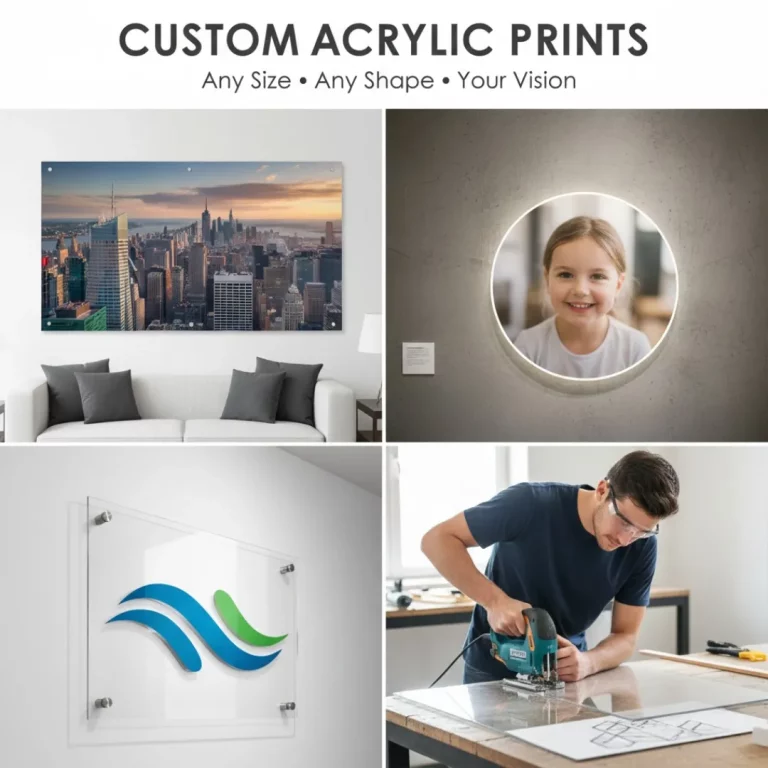
Acrylic is a transparent thermoplastic, often known by trade names like Plexiglass or Perspex. It is a synthetic material known for being lightweight and shatter-resistant. High-quality acrylic is often used in fine art acrylic prints because it offers exceptional optical purity.
What is a Crystal (Glass) Photo Block?
“Crystal” in the context of photo blocks usually refers to high-quality glass (often K9 crystal or optical glass). It is a mineral-based material that is dense, hard, and heavy. It has a classic, premium feel often associated with awards and trophies.
Clarity and Light Refraction
When comparing an acrylic vs crystal photo block, the visual quality is often the deciding factor.
Acrylic: The Clear Winner
Surprisingly to some, high-grade acrylic is clearer than glass. Standard glass often has a slight green tint caused by iron content, which becomes very noticeable in thick blocks. Acrylic is completely colorless, allowing virtually 100% of visible light to pass through. This means your photo’s colors remain true and vibrant, without any color cast. This superior clarity is why acrylic is the standard for luxury acrylic wall art.
Crystal: The Sparkle Factor
Crystal blocks might have that slight tint (unless they are high-end optical crystal), but they are prized for their refractive index. Crystal tends to sparkle more when light hits the edges, giving it a jewel-like quality. However, this high refraction can sometimes distort the image slightly when viewed from extreme angles compared to the consistent view of acrylic.
Weight and Handling
Pick up both blocks, and the difference is immediately obvious.
- Crystal/Glass: It is heavy. A large crystal block feels substantial, like a paperweight. While this weight feels expensive, it also limits where you can place it. A heavy block might be too much for a delicate floating shelf.
- Acrylic: Acrylic is lightweight—roughly half the weight of glass. This makes it much easier to handle, move, and ship. It’s ideal for shelves where weight capacity is a concern, or for larger displays like acrylic wall art for business lobbies.
Durability and Safety
Accidents happen, especially in busy homes or offices. The safety factor is a major point in the acrylic vs crystal photo block debate.
The Fragility of Crystal
Crystal is brittle. If you drop a crystal block on a hard floor, it will likely shatter into sharp, dangerous shards. This makes it a risky choice for households with children or pets.
The Resilience of Acrylic
Acrylic is impact-resistant. If dropped, it is unlikely to break. Even if it does break under extreme force, it tends to crack into large, dull pieces rather than shattering. This safety profile makes acrylic the preferred choice for acrylic wall art for rentals and family spaces.
Cost Comparison
Generally speaking, acrylic is more expensive to produce at high quality than standard glass, but cheaper than high-end optical crystal.
- Standard Glass: Often the cheapest option found in budget stores.
- Acrylic: Mid-to-high price range due to the labor-intensive polishing process required to get those crystal-clear edges.
- Optical Crystal: Usually the most expensive option, reserved for high-end awards and trophies rather than casual photo displays.
If you are looking for budget-friendly decor, you might explore affordable acrylic print ideas which often use thinner panels to save on material costs without sacrificing the look.
Acrylic vs Crystal Photo Block: A Quick Comparison
| Feature | Acrylic Photo Block | Crystal/Glass Photo Block |
|---|---|---|
| Clarity | Excellent (No tint) | Good (May have green tint) |
| Weight | Lightweight | Heavy / Dense |
| Durability | Shatter-resistant | Fragile / Shatters easily |
| Scratch Resistance | Moderate (can scratch) | High (harder to scratch) |
| UV Protection | Often includes UV stabilizers | Minimal natural UV protection |
| Best Use | Homes, Offices, Kids’ Rooms | Awards, Formal Gifts |
Which Should You Choose?
Choose an Acrylic Photo Block If:
- You want the best image quality: The lack of green tint ensures your photo colors are 100% accurate.
- Safety is a priority: You have kids, pets, or high-traffic areas where a knock is likely.
- You prefer a modern look: The clean, clear lines of acrylic fit perfectly with contemporary decor trends, such as acrylic wall decor trends for 2025.
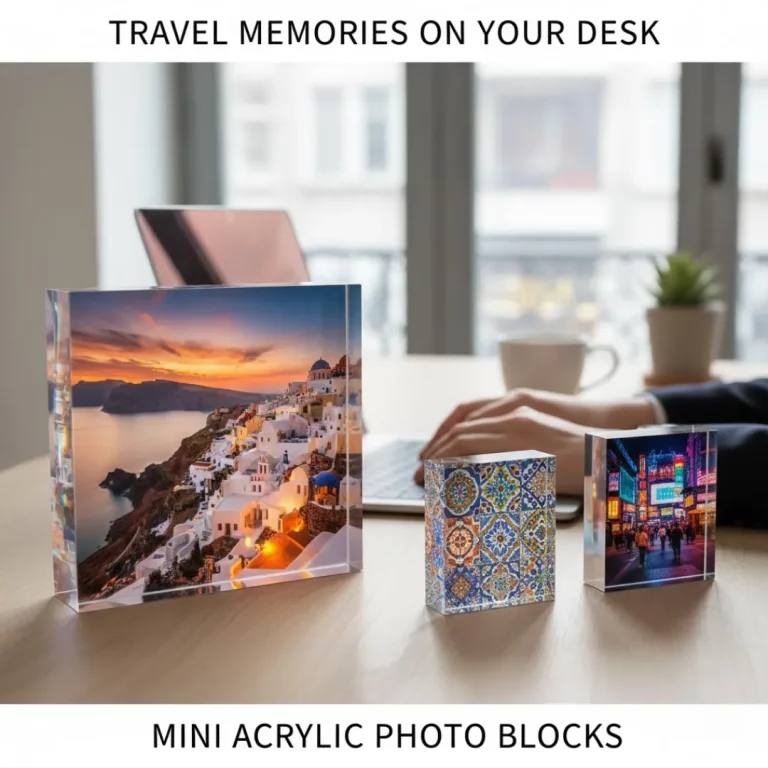
- You need versatility: Acrylic blocks are great for everything from travel photo collages to corporate branding.
Choose a Crystal Photo Block If:
- You want a heavy paperweight: You prefer the substantial, heavy feel of glass in your hand.
- Scratch resistance is key: You plan to wipe it frequently with rougher materials (though you should always use microfiber!).
- It’s a formal award: Crystal is still the traditional material for corporate trophies and awards, though acrylic wall plaque vs. frames discussions show a shift toward acrylic here too.
Conclusion
While both materials offer a stunning, frameless way to display your memories, the acrylic vs crystal photo block comparison reveals clear differences. For most home and office applications, acrylic is the superior choice. It offers better optical clarity, is lighter to handle, and most importantly, is much safer.
Crystal has its place in traditional awards, but if your goal is to showcase a beautiful photograph with vibrant color and modern style, an acrylic block is the clear winner. It brings your images to life without the weight or the worry.
Frequently Asked Questions (FAQ)
Q: Does acrylic scratch easier than crystal?
A: Yes, acrylic is a softer material than glass or crystal, so it can scratch if treated roughly. However, minor scratches on acrylic can often be buffed out with a special polish, whereas scratches on glass are usually permanent.
Q: Will an acrylic block turn yellow over time?
A: High-quality cast acrylic is UV resistant and should not yellow for decades. Cheaper plastics might yellow, so it is important to buy from reputable printers who use premium materials.
Q: How do I clean my acrylic block?
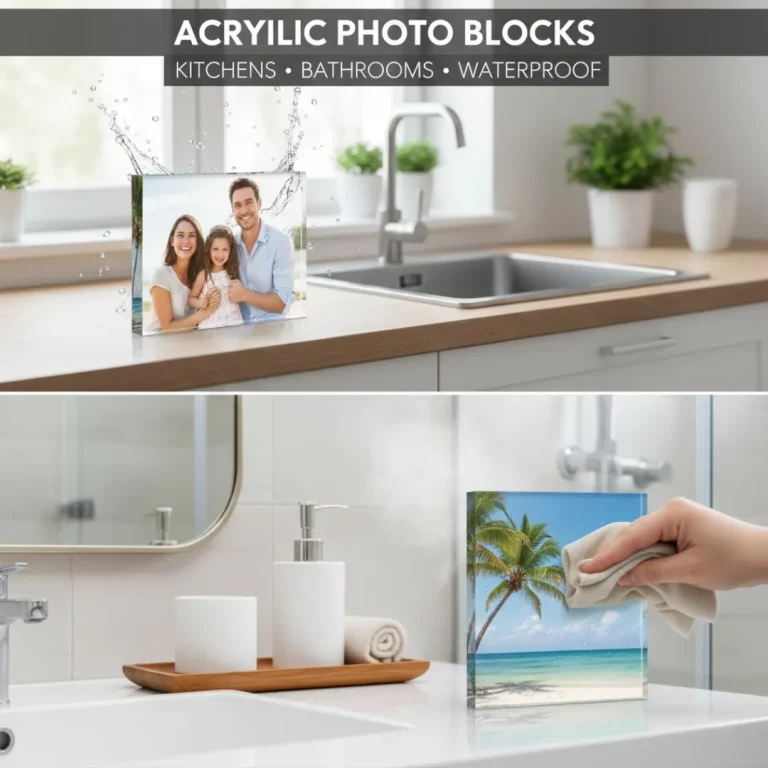
A: Use a soft, lint-free microfiber cloth. If needed, use a small amount of warm soapy water. Never use ammonia-based cleaners like Windex, as they can damage the acrylic surface.
Q: Is “Lucite” the same as acrylic?
A: Yes, Lucite is simply a brand name for high-quality acrylic, just like Plexiglass. If you see a “Lucite photo block,” it is an acrylic block.
Q: Can I use an acrylic block outdoors?
A: Acrylic is weather-resistant and won’t degrade quickly, making it suitable for some outdoor uses. However, prolonged direct sun exposure over many years might cause fading of the photo print itself. For dedicated outdoor art, check out specific guides on outdoor wall art.
Q: Why do my photos look 3D in these blocks?
A: This is due to light refraction. Because the image is mounted on the back of a thick block, you are viewing it through an inch of clear material. The light bends as it enters, creating depth and making the image appear to float inside the block.
Q: Can I get custom shapes in acrylic?
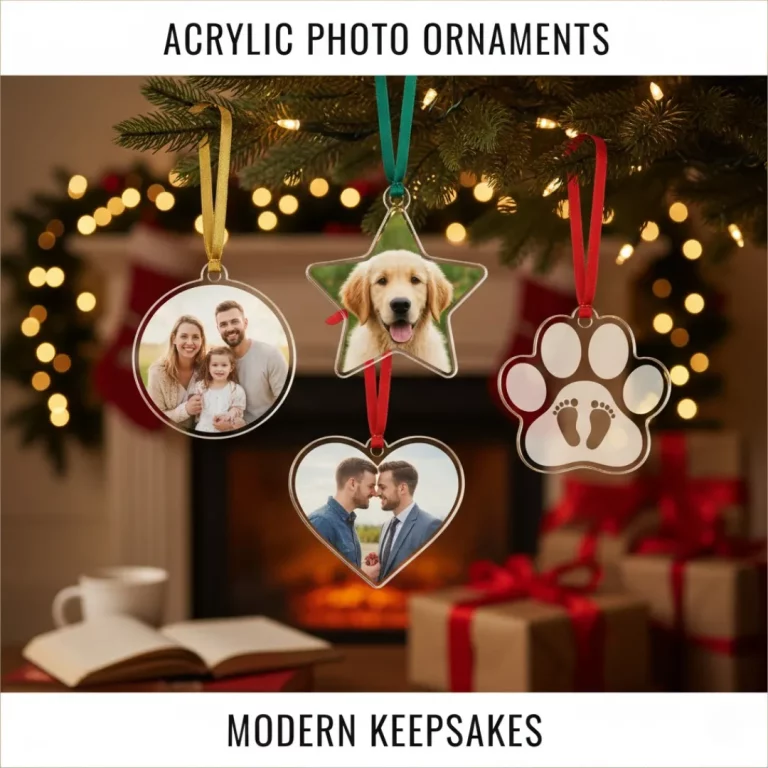
A: Absolutely. One major advantage of acrylic is that it can be easily cut into shapes like hearts, circles, or letters, whereas cutting thick crystal into custom shapes is extremely difficult and expensive.