A large, empty wall can feel intimidating to decorate. While a single oversized art piece is a classic solution, sometimes you need something with more rhythm and impact. Many people love the idea of a segmented display but are unsure how to execute it without it looking cluttered or misaligned.
A multi-panel acrylic wall art display—like a diptych (two panels) or triptych (three panels)—is a sophisticated way to fill a large space and create a powerful visual statement. We’ll guide you through everything you need to know, from choosing the right image to hanging your panels perfectly.
What is Multi-Panel Acrylic Wall Art?
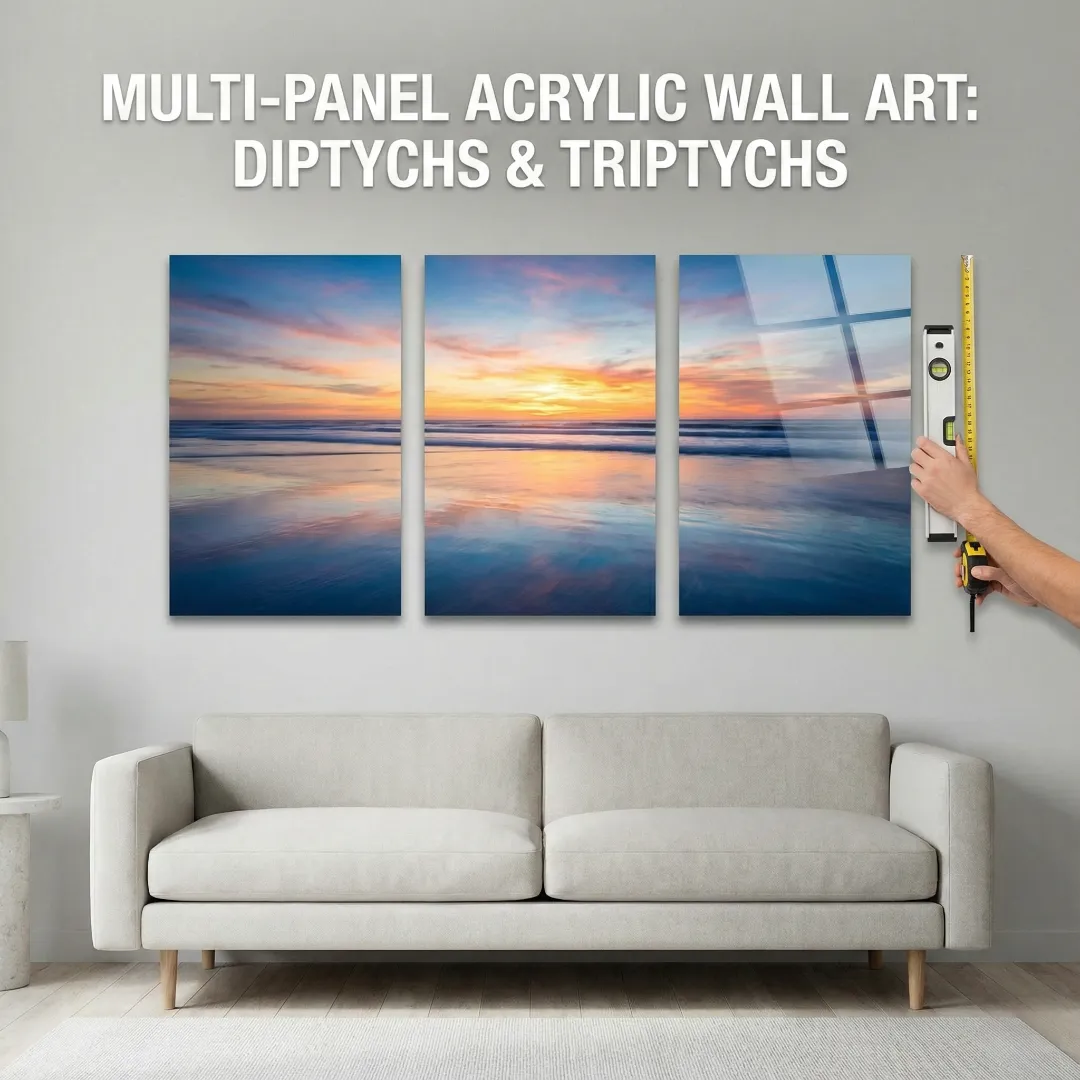
Multi-panel wall art involves splitting a single image across two or more separate panels, which are then hung with a small gap between them. This technique adds a modern, architectural element to the artwork, drawing the viewer’s eye across the entire composition. When applied to acrylic prints, the effect is stunning.
The sleek, frameless look of acrylic combined with the segmented layout creates a high-end, gallery-worthy focal point. The most common formats are:
- Diptych: One image split across two panels.
- Triptych: One image split across three panels.
- Polyptych: One image split across four or more panels.
This style of display is fundamentally different from a gallery wall, which involves grouping multiple individual pictures. A multi-panel display is one cohesive image, a concept you can explore further in our guide to arranging multiple frames.
Why Choose a Multi-Panel Display?
Opting for a multi-panel acrylic wall art display offers several unique advantages over a single large print. It’s a design choice that can elevate your space from simply decorated to professionally styled.
The Benefits of a Segmented Display
- Fills Large Spaces: It’s one of the most effective ways to make a statement on a large, empty wall in a living room, entryway, or office.
- Creates Visual Rhythm: The gaps between the panels create a natural rhythm that guides the eye across the image, making it more dynamic and engaging.
- Modern & Architectural Feel: The clean lines and segmented format feel contemporary and deliberate, adding a layer of sophistication.
- Versatile Layouts: You can get creative with panel sizes and orientations, such as using panels of different heights for an asymmetrical look.
For those considering different art styles, a triptych is a powerful way to display art. You can find more inspiration in our complete guide to triptych art display.
How to Create Your Own Multi-Panel Acrylic Wall Art
Creating a stunning multi-panel display is a straightforward process when you break it down into a few key steps.
Step 1: Choose the Right Image
Not every photo works well when split across multiple panels. The best images have a strong horizontal composition and a clear subject that isn’t disrupted by the gaps.
Images that work well:
- Landscapes & Seascapes: Panoramic views of mountains, beaches, or city skylines are perfect for this format.
- Abstract Art: Broad, flowing abstract designs with colors that spread across the frame look fantastic.
- Wide-Angle Photos: Photos with a lot of negative space or a subject that isn’t dead-center can be split effectively.
Images to avoid:
- Portraits: Splitting a person’s face can be jarring and unflattering.
- Photos with Central Subjects: If the main point of interest is in the middle, it might fall directly into one of the gaps.
When selecting your image, consider its purpose. Is it for a calming bedroom or an impressive office? Our guide to choosing wall art for your home can help you decide on a theme.
Step 2: Decide on a Layout
The layout determines the final look of your multi-panel acrylic wall art. While a classic triptych with three equal panels is the most popular, you have other options.
| Layout Style | Description | Best For |
| Classic Triptych | Three panels of equal size, hung at the same height. | Creating a balanced, symmetrical look. |
| Diptych | Two panels of equal size, hung side-by-side. | Smaller spaces or minimalist designs. |
| Staggered | Three or more panels where the center panel is hung slightly higher or lower. | Adding a dynamic, modern twist. |
| Asymmetrical | Panels of different widths or heights. | A bold, artistic, and unconventional statement. |
Step 3: Plan Your Measurements and Spacing
Precision is key to a professional-looking installation. Before you even order your prints, you need to plan your spacing.
- Measure Your Wall: Determine the total width you want the display to cover.
- Calculate Panel Size: Divide the total width by the number of panels. Remember to subtract the space for the gaps.
- Determine Gap Size: The space between panels should be consistent. A gap of 1-2 inches is standard for most displays. A larger gap can create a more deconstructed, artistic look.
Pro-Tip: Before ordering, use a tool like Canva or an online photo editor to crop your image into separate files for each panel. This helps you visualize how the final piece will look and ensures the print shop produces it correctly.
How to Hang Your Multi-Panel Acrylic Art
Hanging your panels perfectly straight and evenly spaced is the final and most crucial step. Take your time here—the results are worth it.
Tools You’ll Need:
- Tape measure
- Pencil
- Level (a laser level is ideal)
- Drill and screws/anchors appropriate for your wall type
The Step-by-Step Hanging Process
- Hang the Center Panel First: For a triptych, start with the middle piece. This will anchor your entire display. Use your level to ensure it’s perfectly straight before marking your drill holes. More tips can be found in our guide on how to hang pictures at eye level.
- Measure for the Gaps: Once the center panel is up, use your tape measure to mark the desired gap distance (e.g., 2 inches) on either side.
- Hang the Side Panels: Use your level to align the top of the side panel with the top of the center panel. Mark your drill holes at the measured gap distance.
- Double-Check Everything: Before drilling the final holes, do one last check with your level and tape measure to ensure everything is aligned. For more advice on hanging, especially for larger pieces, refer to our article on how to securely hang heavy frames and prints.
Conclusion
A multi-panel acrylic wall art display is a sophisticated and powerful way to transform any large wall. By splitting a single, beautiful image across multiple panels, you create a dynamic and modern focal point that is far more impactful than a simple print. With careful planning of your image, layout, and installation, you can achieve a professional, gallery-quality look that will redefine your space.
Ready to create your own stunning multi-panel masterpiece? Explore our custom acrylic printing options and start designing today.
Frequently Asked Questions (FAQ)
Q: What is a triptych?
A: A triptych is a single work of art that is split across three separate panels. These panels are intended to be displayed together. It’s a popular format for large walls as it creates a cohesive and impactful display.
Q: What kind of pictures look good as a 3-panel art piece?
A: Panoramic landscapes, wide cityscapes, and large-scale abstract designs work best for 3-panel art. The key is to choose an image with a strong horizontal composition where the main subject won’t be awkwardly cut by the gaps between the panels.
Q: How much space should be between multi-panel art?
A: A gap of 1 to 2 inches between each panel is standard for a clean, cohesive look. For a more dramatic or deconstructed style, you can increase the gap to 3 inches or more, but be sure to keep the spacing consistent between all panels.
Q: How do you hang a 3-piece acrylic wall art set?
A: Start by hanging the center panel, ensuring it is perfectly level. Then, measure your desired gap (e.g., 2 inches) from the edge of the center panel and use a level to hang the side panels at the same height. Using a laser level can make this process much easier.
Q: Is multi-panel acrylic wall art more expensive?
A: Creating a multi-panel display can be comparable in price to a single, very large oversized print. The cost is based on the total square footage of acrylic used. While three smaller panels might cost more than one medium-sized print, they can be more affordable than one massive custom-sized piece.
Q: Can I use different-sized panels?
A: Yes, using panels of different sizes can create a unique and artistic asymmetrical layout. This is a more advanced design choice but can look very striking with the right abstract image or composition.Q: What is the difference between multi-panel art and a gallery wall?
A: Multi-panel art, such as a triptych, is a single image divided across multiple panels. A gallery wall is a collection of different, individual artworks and photographs grouped together. Our guide on how to create a stunning gallery wall explains this concept in more detail.