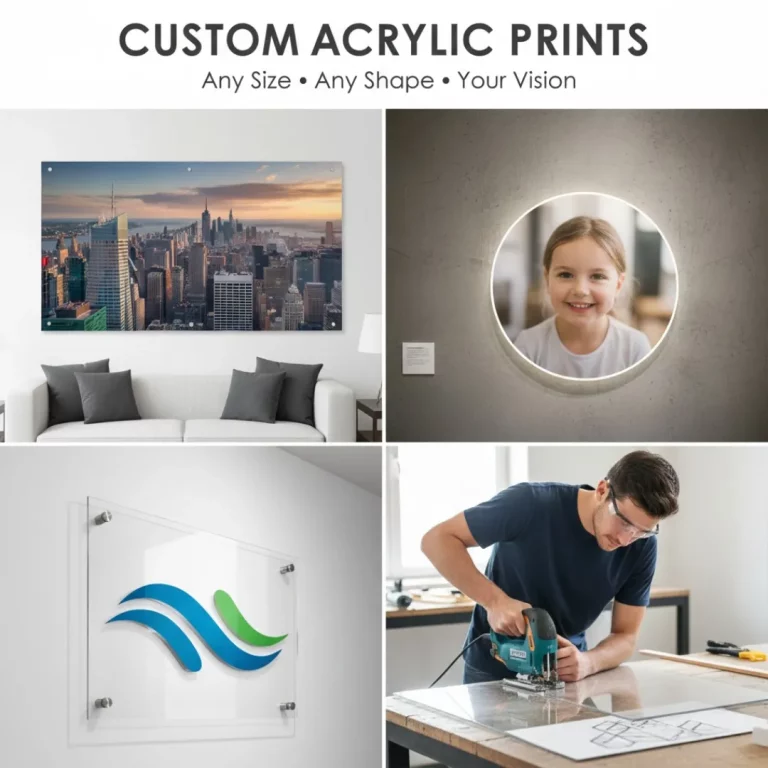
That huge, empty wall in your home is a blank canvas with massive potential. It could become the stunning focal point of your living room or a serene backdrop in your bedroom. But when it comes to decorating large walls, the options can feel overwhelming. Two popular choices for making a big impact are photographic wall murals and large acrylic prints.
You might be wondering which is the better investment, which is easier to install, and which will give you the “wow” factor you’re looking for. The debate of wall mural vs acrylic print comes down to permanence, visual texture, and overall style. This guide will break down the differences, helping you decide which large-scale artwork is the perfect fit for your space and vision.
What is a Photographic Wall Mural?
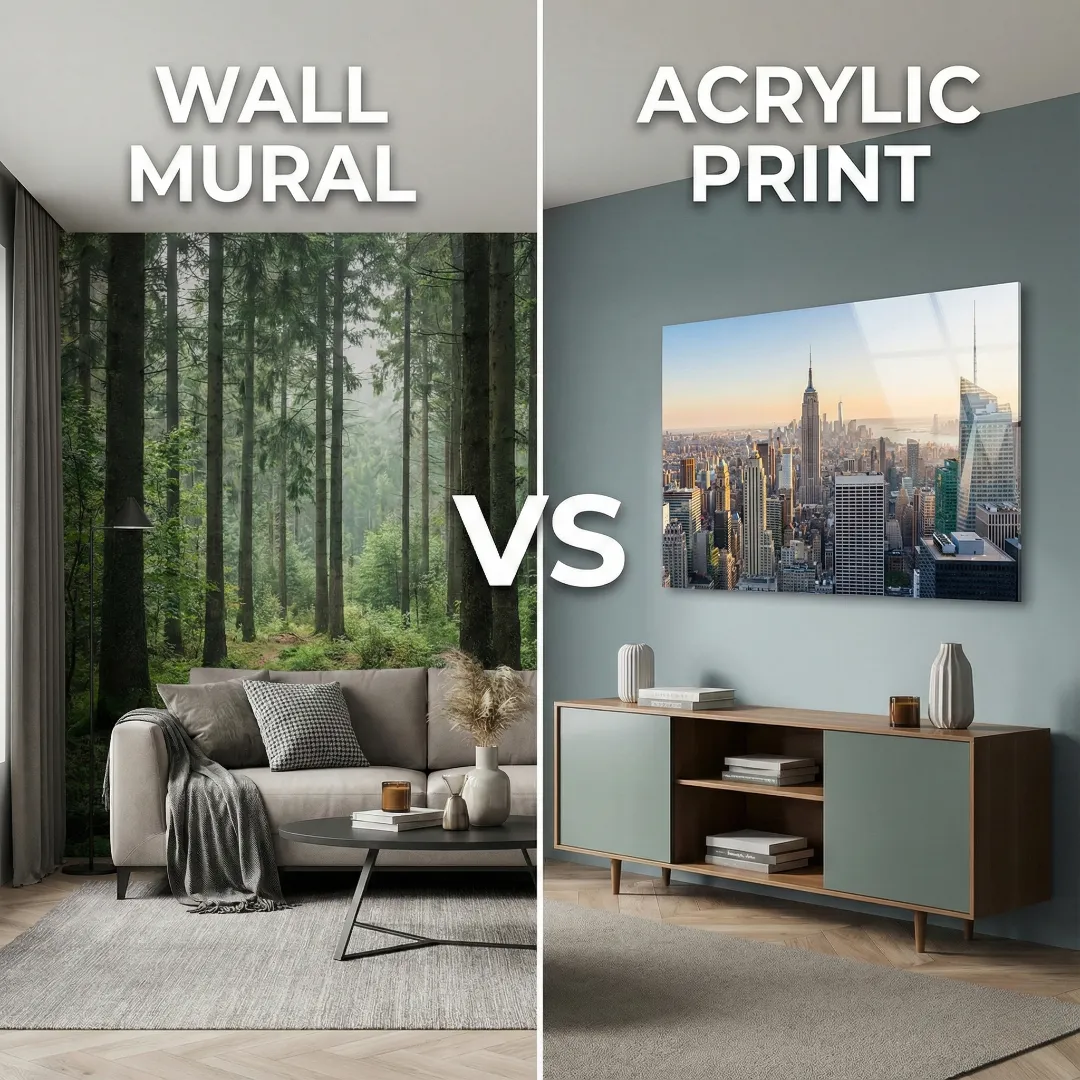
A photographic wall mural is essentially a wall-sized photograph. It’s printed on a special type of wallpaper or adhesive vinyl and applied directly to the wall, covering it from edge to edge. Murals are designed to create an immersive experience, making you feel like you’ve stepped right into the scene.
Imagine a floor-to-ceiling photograph of a misty forest in your bedroom or a sprawling cityscape behind your sofa. Murals are all about creating a transformative atmosphere. They blend seamlessly with the wall, becoming an integral part of the room’s architecture rather than just a piece of decor hanging on it.
Key Features of Wall Murals:
- Immersive Experience: Covers the entire wall, creating a full-room ambiance.
- Seamless Look: Becomes part of the wall itself with no frames or borders.
- Variety of Materials: Available in options like peel-and-stick vinyl for easy application or traditional wallpaper for a more permanent feel.
- Matte Finish: Most murals have a non-glossy finish to reduce glare and create a softer, more integrated look.
What is a Large Acrylic Print?
A large acrylic print, on the other hand, is a distinct object that hangs on the wall. To create one, a high-resolution photograph is printed onto professional-grade paper and then mounted behind a sheet of polished acrylic. This process gives the image incredible depth, vibrancy, and a sleek, modern finish.
Unlike a mural, an acrylic print is a defined piece of art. It doesn’t cover the entire wall but instead serves as a powerful focal point. The frameless design makes it appear as if it’s floating, adding to its contemporary appeal. For ideas on how to display them, check out these 10 stunning ways to use acrylic photo frames.
Key Features of Acrylic Prints:
- Stunning Visual Pop: The acrylic enhances color and contrast, creating a vibrant, high-definition look.
- Sense of Depth: Light passes through the acrylic, giving the image an almost 3D quality.
- Modern and Frameless: Offers a clean, gallery-worthy presentation perfect for contemporary spaces.
- Durability: Acrylic is shatter-resistant and protects the photograph from dust and UV damage.
Wall Mural vs Acrylic: A Side-by-Side Comparison
Choosing between these two formats depends entirely on your goals. Let’s compare them across a few key factors to see which one comes out on top for your needs.
| Feature | Photographic Wall Mural | Large Acrylic Print |
| Visual Impact | Immersive, atmospheric, blends in. | Focal, vibrant, stands out. |
| Installation | DIY-friendly but requires precision. | Simple hanging, like a picture frame. |
| Permanence | Semi-permanent to permanent. | Easily movable and replaceable. |
| Durability | Prone to scuffs, tears, and fading. | Highly durable, UV-protected. |
| Best For | Themed rooms, accent walls, renters. | Statement pieces, modern decor. |
Visual Style and Impact
The core difference in the wall mural vs acrylic debate is the type of statement you want to make.
- A wall mural creates an environment. It’s perfect for a child’s bedroom with a space theme or a dining room with a Tuscan landscape. The goal is total immersion.
- An acrylic print is a showpiece. It demands attention and is ideal for showcasing a single, powerful photograph. It acts as a window to another world rather than transforming the entire room. Comparing them to other print types, like metal, shows that acrylic prints offer unique benefits.
Installation and Versatility
Installation is another major deciding factor.
- Wall murals, especially peel-and-stick versions, are manageable DIY projects. However, they require patience and a steady hand to align the panels perfectly and avoid bubbles. Once up, they are considered semi-permanent and can be difficult to move.
- Acrylic prints are much simpler to install. They hang just like a large picture frame, often with a French cleat or wire system. This makes them perfect for homeowners who like to rearrange their decor or for renters who can’t make permanent changes. You can learn more about how to securely hang heavy frames and prints for safety.
Durability and Maintenance
Your artwork should last, so durability is key.
- Wall murals are more vulnerable to daily life. They can get scuffed, torn, or stained, especially in high-traffic areas. Their color may also fade over time, depending on the material and sun exposure.
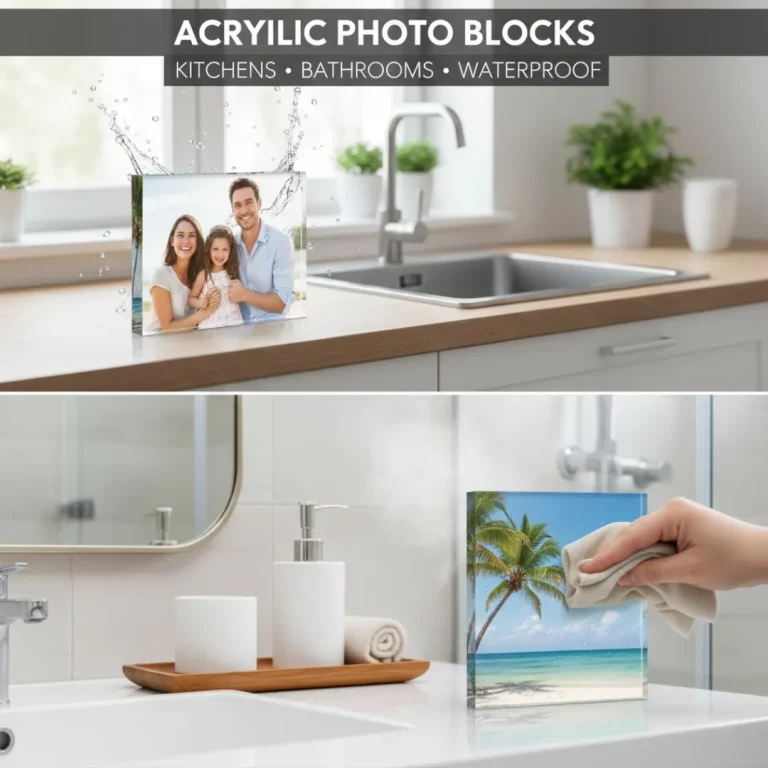
- Acrylic prints are built to last. The acrylic itself protects the photo from physical damage and UV rays. They are easy to clean with a soft cloth, making them a practical choice for homes with kids or pets.
Which Is Right for Your Large Wall?
So, how do you choose? Here’s a quick guide to help you decide.
You should choose a photographic wall mural if:
- You want to create a completely immersive, themed environment.
- You are decorating an entire accent wall from floor to ceiling.
- You have a smooth, well-prepared wall surface.
- You’re comfortable with a semi-permanent installation.
You should choose a large acrylic print if:
- You want a single, high-impact focal point.
- Your decor style is modern, minimalist, or contemporary.
- You want your artwork to have a vibrant, high-gloss finish.
- You value durability and the flexibility to move your art. When considering sizes, a guide on frame sizes can be helpful.
You can also combine concepts, for instance by placing a sleek acrylic print on a wall with a subtle, textured mural for a layered look.
Conclusion: Crafting Your Perfect Wall
When it comes to artwork for large walls, there is no single right answer in the wall mural vs acrylic discussion. Each offers a unique way to express your style. A photographic wall mural transforms your space into a new environment, while a large acrylic print serves as a stunning, gallery-quality centerpiece.
By considering your design goals, lifestyle, and desired level of permanence, you can confidently choose the format that will turn your large, empty wall into a testament to your personal taste.
Frequently Asked Questions (FAQs)
Q: Can I put a mural in a bathroom or kitchen?
A: Yes, but you must choose the right material. Look for murals made from water-resistant vinyl that can withstand humidity and be wiped clean. Avoid traditional paper-based murals in these areas.
Q: Are acrylic prints heavy?
A: Large acrylic prints have some weight, but acrylic is significantly lighter than glass. A proper hanging system, like a French cleat, distributes the weight evenly and ensures a secure installation.
Q: Can I use my own photo for a wall mural or acrylic print?
A: Absolutely! Both can be customized with your own images. However, for large formats, the photo must be extremely high-resolution to avoid looking blurry or pixelated when enlarged.
Q: Which is more expensive, a wall mural or a large acrylic print?
A: The cost can be comparable, depending on size and quality. A high-quality, custom-sized mural can be a significant investment, as can a very large, thick acrylic print from a premium supplier. Generally, for a similar square footage, a high-end acrylic print may cost more than a standard peel-and-stick mural. Understanding the differences between budget vs. luxury display options can provide more context.
Q: Does an acrylic print have glare?
A: Standard acrylic prints have a glossy finish that can produce some glare, similar to glass. However, the vibrancy and depth they provide often outweigh this. For rooms with very bright, direct light, you can look for non-glare acrylic options, which offer a more matte finish.
Q: How difficult is it to remove a wall mural?
A: It depends on the type. Peel-and-stick murals are designed for easier removal and are often renter-friendly, though they may still pull off paint if not removed carefully. Traditional, paste-applied murals are much more difficult to remove and will likely require scraping and wall repair.Q: Can I frame a large acrylic print?
A: While the frameless look is part of their appeal, you can frame acrylic prints. Floating frames are a popular choice, as they create a border without covering the print’s polished edges, adding a finishing touch while preserving the modern aesthetic. You might find a guide on choosing floating frames helpful.